Trump signs executive order inviting voluntary 30-day federal vetting of frontier AI models
President Donald Trump on June 2, 2026 signed an executive order titled 'Promoting Advanced Artificial Intelligence Innovation and Security,' establishing a voluntary framework under which AI developers can give the fede.
VERDICT — CONFIRMED
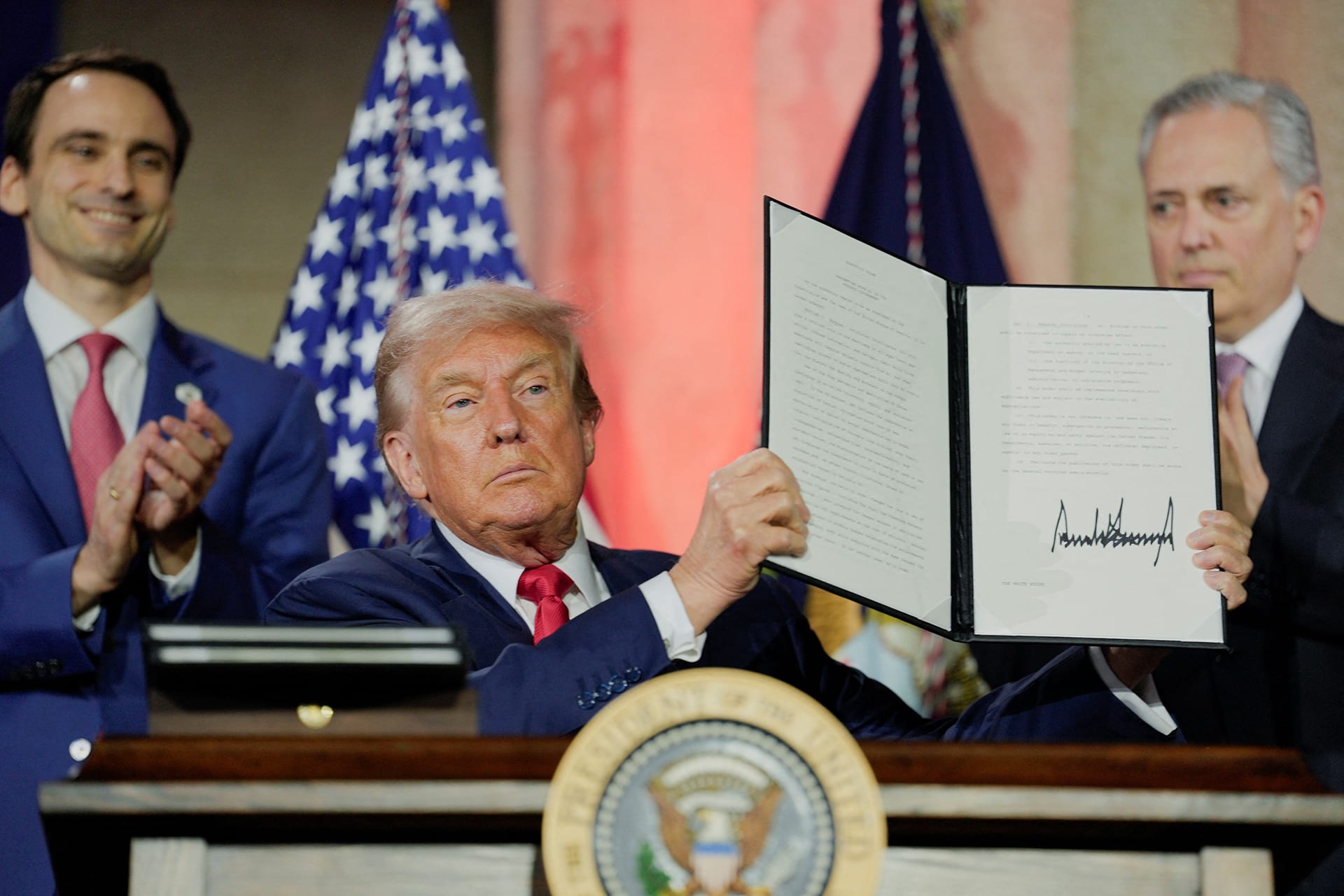
President Donald Trump on June 2, 2026 signed an executive order titled 'Promoting Advanced Artificial Intelligence Innovation and Security,' establishing a voluntary framework under which AI developers can give the federal government early access to their most capable models for up to 30 days before public release. The order directs the NSA, in consultation with the National Cyber Director and CISA, to build and maintain a classified benchmarking process to assess the advanced cyber capabilities of AI models and to designate 'covered frontier models.' It tasks the Treasury Department with creating an AI cybersecurity clearinghouse to scan for, validate and prioritize remediation of software vulnerabilities, and gives agencies 30-60 days to harden government systems and expand AI-enabled defenses; named agencies include NSA, CISA, OMB, Treasury, the Department of War and DHS.
The signing came less than two weeks after the White House postponed an earlier ceremony; reporting noted an earlier draft would have given the government up to 90 days to review models, a window cut to 30 days in the final order amid concern it could blunt US competitiveness against China. The administration framed the order as voluntary and pro-innovation; CFR analysts characterized it as an attempt to engineer a 'cybersecurity window of opportunity'—giving defenders preferential early access to frontier cyber capabilities while delaying adversary access—but cautioned that 'consistent patching remains an unsolved problem,' especially for open-source and under-resourced critical infrastructure, and that fixed capability assessments are complicated by models that are 'probabilistic, goal-directed, increasingly autonomous, and opaque.' The order stops short of mandatory pre-release testing, distinguishing the US approach from the EU AI Act's binding GPAI regime.